
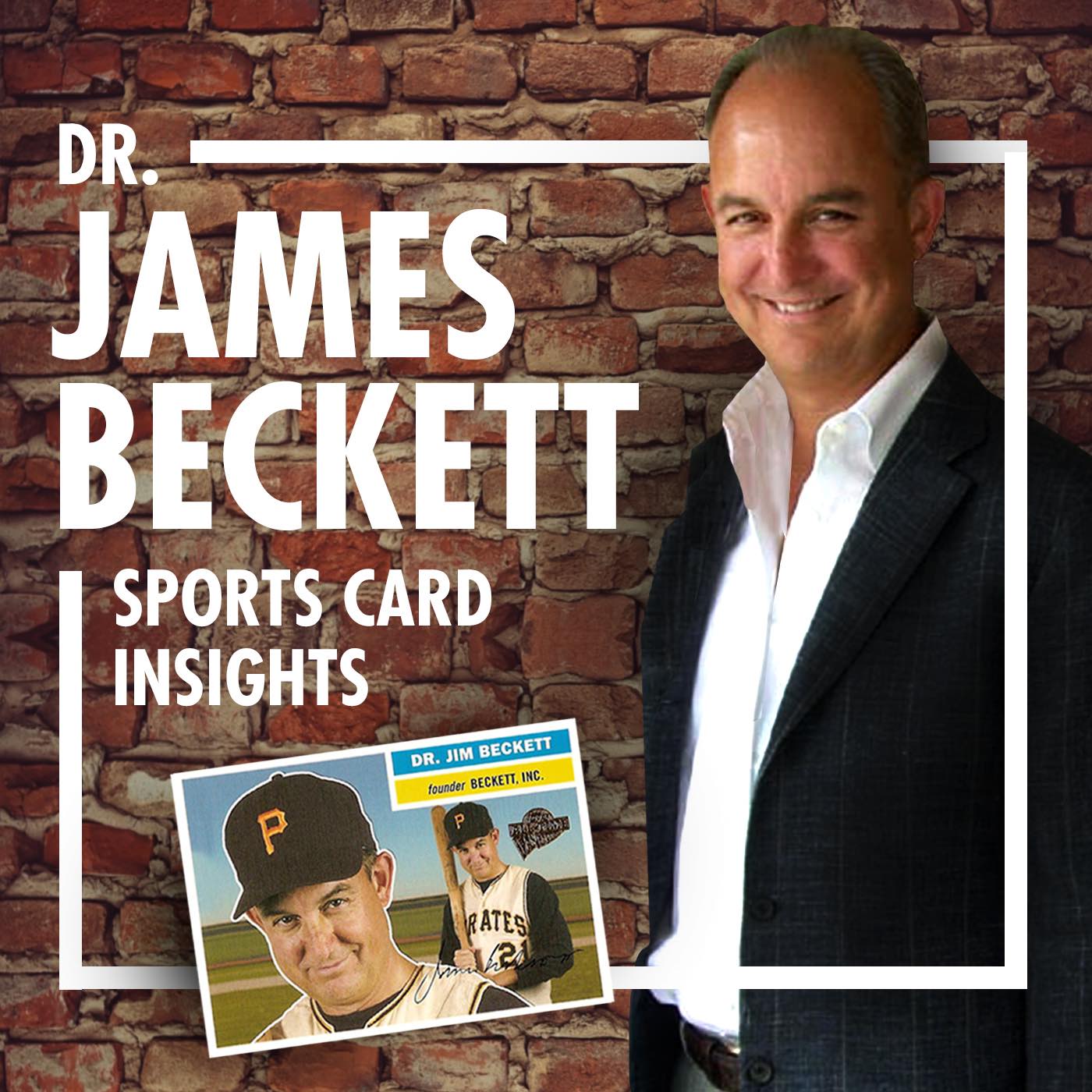
Dr. Beckett unretires to share sports card stories, analyses, and opinions, based on his six decades of intensive experience.
Episodes
2 days ago
2 days ago
19 min
Dr. Beckett wraps up part two of “Buying Strategies: Then and Now,” responding to Geoff Wilson’s recent list of 20 money-making opportunities in the sports card hobby, focusing on ideas 9–20 that emphasize creative business models and solving collector problems. He contrasts modern “build an audience then monetize” approaches with earlier methods, and shares personal preferences and experiences with brokering/consignment, live commerce, breaking, grading submission services and pre-grading, setting up as a dealer at shows, ethical repacks, doing tasks others avoid, running shows and events, building software/marketplaces, and selling supplies/accessories. Dr. Beckett stresses reputation, transparency, and brand trust across these models, notes opportunities created by changing grading policies, and argues success relies more on hard work, initiative, knowledge, relationships, and execution than luck, with far more than 20 viable ideas.
00:48 Serve First Mindset
01:17 Build an Audience
03:12 Collections and Consignment
05:47 Live Commerce Today
06:37 Breaking and Trust
07:46 Grading Submission Services
09:25 Dealer Tables at Shows
11:06 Ethical Repacks
11:51 Collector Chores as Business
13:05 Running Shows and Events
14:43 Software Marketplaces and AI
16:34 Supplies and Accessories
17:32 Big Picture Takeaways
4 days ago
4 days ago
18 min
Dr. Beckett reacts to Geoff Wilson’s recent “20 ways to make money in sports cards” by comparing how the first eight strategies worked 50 years ago versus today’s technology-driven market. He discusses buying entire collections, marketplace “arbitrage” through superior knowledge, grading plays (raw-to-graded and crossovers), and monetizing eye appeal, noting that condition and presentation matter more now than in earlier decades. Beckett contrasts past show-circuit seasonality with modern price rhythms tied to sports seasons, and explains how prospecting on unproven players has evolved and remains risky. He reviews trading and trading up versus trading down, and the growth of sealed wax as an investment, including pitfalls like junk wax overproduction and expiring redemptions. He closes by emphasizing how instant information has transformed the hobby.
01:46 Buying Whole Collections
05:07 Arbitrage and Regional Knowledge
06:16 Grading and Eye Appeal
08:18 Seasonality and Timing
09:37 Prospecting on Players
11:17 Trading Up or Down
12:33 Sealed Wax and Unopened Product
7 days ago
7 days ago
20 min
Dr. Beckett examines sports card “bounties” as an unregulated, value-shaping market force that can be legitimate demand or a “shill bounty” designed to drive prices up through unrealistic conditions. He discusses whether bounties are binding, how bounties existed in earlier collecting via want lists, buy ads, and trades, and how price guides historically used both sales and unsold asking prices to separate signal from noise in an inefficient, regional market. Beckett explains how today’s social media and one-of-ones amplify publicity, attract hidden supply, and can anchor new “super retail” standards, while bounty battles effectively invite auctions. He cautions against assuming resale gains, prefers linear appreciation over volatile spikes, and argues every card has a price but context and availability matter when interpreting last-sale and bounty-driven prices.
00:23 What Bounties Really Mean
01:41 Old School Want Lists
03:37 Price Guides and Market Signals
06:26 Modern Market Efficiency
08:34 Every Card Has a Price
10:41 Bounty Hype and Printing
11:42 One of Ones and Bounty Wars
13:08 Linear vs Exponential Prices
14:13 Scarcity Math and Winner Take Most
16:39 Bounties Can Reveal Hidden Supply
Sep 16, 2026
Sep 16, 2026
18 min
Dr. Beckett discusses his Basketball Card Hall of Fame Ballot (2026), thanks organizers Ray and Tony, explains his voting approach, and announces his four vintage votes (1961-62 Fleer Jerry West, 1961-62 Fleer Oscar Robertson, 1970-71 Topps Pistol Pete Maravich, and 1967-68 Topps Test Wilt) and four modern votes (1992-93 Stadium Club Beam Team Shaquille O'Neal, 1997-98 Metal Universe Jordan Green/Red PMG, 1997-98 Upper Deck Jordan Game Jersey #/23, and 2008-09 Topps Chrome Kobe Bryant with LeBron guarding), while directing viewers to thesportscardhalloffame.com to vote.
00:59 Vintage and Modern Classes
03:25 How to Vote Online
04:15 Vintage Ballot Criteria
06:50 Fleer Memories and West
08:43 Grail Cards and Tall Boys
11:31 Stars and Fleer Rookies
13:23 Shaq and 90s Inserts
14:35 PMG and Hobby Love
15:54 Jersey Card and Kobe
Sep 14, 2026
Sep 14, 2026
16 min
Dr. Beckett explores what it really means to be a “collector” versus a “player” in the sports card ecosystem, arguing that many new participants are drawn more to the action: buying, selling, trading, breaking, ripping, repacking, and tracking comps, rather than to long-term accumulation. He discusses industry growth goals like “10Xing,” referencing Fanatics’ push to expand the addressable market across a broader sports commerce ecosystem, and notes Panini’s past inroads while Fanatics lowers barriers by leveraging existing fan customers. Dr. Beckett frames participation as a funnel from spectator to player to collector, emphasizing that not everyone has the “collecting gene,” but collectors remain essential as end users who provide a final resting place for cards. He advocates for a healthy balance of players and collectors, highlights how liquidity and network effects have changed shows and pricing, and notes content creation can support both better “play” as well as collector formation.
00:50 Collectors Versus Players?
00:58 Fanatics And Market Growth
02:52 Action Driven Hobby
04:55 Video Games And Golf
05:53 Cards As Products
06:46 Need End User Collectors
07:13 Being A Hybrid
08:59 Liquidity And Network Effects
11:31 From Player To Collector
12:17 Junk Wax Lessons
14:02 Voices Across Spectrum
15:22 Industry Versus Hobby
Sep 11, 2026
Sep 11, 2026
15 min
Dr. Beckett marks the 25th anniversary of 9/11 with brief reflections on perspective and gratitude to those who served, then shifts to a lighter topic: the fun of “reveals” in collecting. He shares opening two Upper Deck products sent to him: Premier (one pack of six cards, including autographs and memorabilia) and Clear Cut (one encased autograph), and then compares the extended suspense of multi-card packs to the one-and-done experience. Dr. Beckett discusses how reveals happen through mail days, grading submissions, dollar box finds, and group breaks, emphasizing he prefers many small dollar-box reveals over a single expensive hit. He critiques random-team breaks that can leave buyers with no cards, arguing he wants to always get something, and praises Upper Deck’s strong role in hockey and the hobby.
00:18 9/11 Reflection
03:29 Why Hockey and Upper Deck
06:04 Premier vs Clear Cut Reveal
07:50 Mail Day Risks and Grading
09:01 Dollar Box Joy
09:44 Breaks and Vicarious Hits
10:21 Random Team Math and Fine Print
13:01 Getting Nothing Feels Like Gambling
Sep 9, 2026
Sep 9, 2026
18 min
Dr. Beckett hosts a wide-ranging “dueling questions” conversation with longtime friend and former colleague B.A. Murry, discussing early National show memories and table costs, regrets about selling too soon and not buying more, and Murry’s niche of curated obscure/oddball items for star players rather than post-2000 inventory. They compare old-school pricing confidence versus today’s reliance on comps, the role of want lists in proving collector intent, and how scarcity knowledge came from what advanced collectors repeatedly needed. They recount non-sports material once being hard to sell, the impact of licensing changes and eBay on sourcing, and Murry’s preference to sell to end collectors rather than flippers. Dr. Beckett also reflects on selling his company years ago, scaling back travel, health lessons, and how the hobby and the National foster friendships and therapeutic enjoyment.
00:41 Regrets and Early Nationals
01:32 Finding a Dealer Niche
03:13 eBay and Pricing Without Comps
06:50 Non Sports Wax Box Lessons
08:46 No Flipping Long Term Mindset
09:56 Want Lists and Scarcity Signals
11:12 John Rumirez and Master Sets
13:45 Life After Selling the Company
14:52 Health Perspective and Daily eBay
16:47 Independence and Hobby Therapy
17:48 National Show Community Wrap Up
Sep 7, 2026
Sep 7, 2026
17 min
Dr. Beckett discusses “The LCS Spectrum,” arguing that local card shops can succeed in many different ways, from old-school vintage-heavy stores to modern, high-end shops focused on new product, breaking, events, and social media. He proposes an idea for a directory or app that profiles shops with verified answers so travelers and customers know what a store offers, and so manufacturers like Fanatics, Panini, Upper Deck, and others could use consistent criteria for direct accounts and allocations. Using his former Dallas shop First Base as an example, he outlines categories for evaluating an LCS, including business sustainability, market/location, product mix, physical presentation, repeat business, creating collectors, people development, hobby citizenship, reach beyond local geography, and a distinctive “claim to fame.”
00:23 The LCS Spectrum Idea
02:10 Old School vs Modern Shops
03:30 Why Categorize Shops
04:10 Dealers and Hobby Economics
05:52 1 Real Business Basics
06:48 2 Location and Market
07:46 3 Product Mix Inventory
09:08 4 Store Presentation
09:54 5 Repeat Business
10:11 6 Creating Collectors
11:40 7 People Development
12:30 8 Hobby Citizenship
12:55 9 Reach and Celebrity
13:50 10 Claim to Fame
14:33 Modern Requirements and Allocation
Sep 4, 2026
Sep 4, 2026
20 min
Dr. Beckett discusses current grading company dilemmas, noting PSA and BGS pauses and SGC’s sharp basic-rate increase, and asks why PSA graded fewer cards in August despite attacking its backlog. He argues output varies with submission mix because higher-tier cards take longer and require greater scrutiny, and the true scarce resource is trained, credible grading judgment—not plastic, shipping, imaging, or even raw headcount. Beckett explains why double shifts risk burnout, why scaling slows production as senior graders train new hires, and why PSA’s $80 floor functions as demand control enabled by pricing power and resale premiums. He comments on CGC’s strength in TCG, TAG’s human-review bottlenecks despite tech, the limits of AI, the subjectivity of eye appeal metrics, the rise of pre-grading, changing perceptions of raw cards during pauses, and why PSA’s registry/pop report network effects are hard to match.
00:39 Why PSA Output Dropped
01:43 Training Limits Capacity
02:32 Burnout and Shift Myths
04:39 PSA Pricing Power Explained
07:40 BGS Pause and Standards
09:00 SGC Price Hike Strategy
11:21 TAG Tech and AI Limits
13:00 Eye Appeal and iAppeal Debate
17:02 New Grading Entrants Ahead
18:45 Pay and Industry Moats
Sep 2, 2026
Sep 2, 2026
19 min
Dr. Beckett welcomes longtime friend and former colleague B.A. Murry for a wide-ranging conversation covering their decades in the sports card hobby. They discuss Murry’s distinction as one of the “three amigos” who have set up at every National, Beckett’s attendance at every National, and memories of the earliest shows in Los Angeles and the original promoters. Murry recounts early mail-order buying from Sam Rosen/Card Collectors Company, inexpensive complete sets like 1948 Bowman and 1951 Topps Redbacks, ordering 1957 Topps as issued, and an early regret of giving away 1954 cards. They reflect on the shift from set-building and want lists to modern high-dollar “lottery” ripping, debate what counts as vintage, and share 1970s–80s hobby stories including St. Louis gatherings, auctions, and using the first annual guide.
00:41 National Show Regulars
01:12 Origins of the National
02:30 Mail Order Hobby Beginnings
05:41 Early Selling and Regrets
07:25 OG Perspective on Today
08:43 Want Lists and Set Building
09:32 Adult Hobby Takes Off
12:08 Collector Mindset and Roots
14:37 Buying Trips and Vintage Lines
17:52 Late Night Auctions Stories