
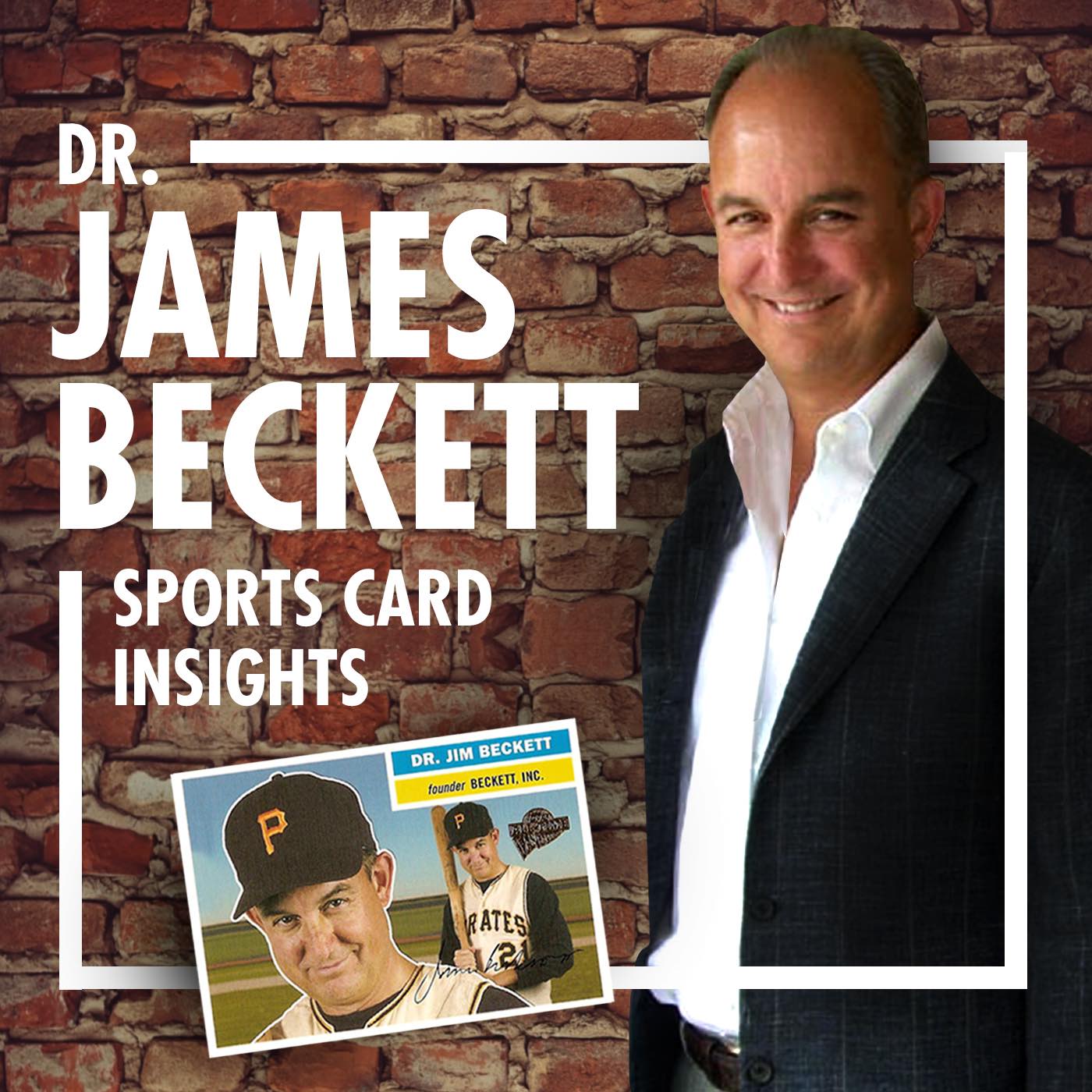
Dr. Beckett unretires to share sports card stories, analyses, and opinions, based on his six decades of intensive experience.
Episodes
Jul 8, 2026
Jul 8, 2026
13 min
Dr. Beckett previews an upcoming conversation with Darren Ostrom (the Sports Card Professor) about publishing a hobby book and reflects on how “virality” has evolved in sports card collecting. Beckett contrasts earlier eras when buzz spread slowly by word of mouth, mail, and limited shows and was driven by scarce discoveries and hard-to-find cards regardless of condition, with today’s influencer- and price-driven demand where availability and social proof fuel hype. He discusses examples such as the 1983 Topps Traded Darryl Strawberry XRC, Fernando Valenzuela, tough and popular vintage targets like the 1963 Topps Rose rookie, 1967 Topps Brooks Robinson, 1952 Topps Mantle, and the continuing hunt for cards like T206 Wagner and 1933 Goudey Lajoie. He emphasizes a low-supply buying philosophy and thanks episode sponsors.
02:29 What Went Viral Then
03:50 Strawberry and Fernando Mania
04:59 Discoveries and Tough Cards
06:28 Rare Card Showdown Story
07:57 Vintage Icons and Short Prints
09:04 Price Driven Virality Today
09:35 Low Supply Buying Strategy
11:17 Reverse Virality Junk Wax
11:27 FB Marketplace Collection Pass
Jul 6, 2026
Jul 6, 2026
19 min
Dr. Beckett shares out-takes from Hobby Hotline and his co-hosts Adam Palmer and Rich Klein. Rich describes going with the flow at shows and finding bargains like a Riley Greene Heritage All-Star variation and short-printed Hall of Famers, plus selectively buying specific base rookies. They note live selling platforms have reduced the quality and quantity of dollar-box deals as sellers and buyers move faster. Rich cites the macro strategy of selling into up markets and buying into down markets. The group also addresses hobby negativity, valuing specific, experience-based criticism over anonymous rants.
02:25 Ugly Cards and Low Demand
02:55 Rich Finds Hidden Variations
06:50 House Full of Cards Story
07:53 Live Selling Changes Boxes
14:00 Value Box Speed and Competition
16:49 Constructive Criticism Example
Jul 3, 2026
Jul 3, 2026
15 min
Dr. Beckett dedicates the episode to hobby giant Jack Smalling, who died last week at age 85. Beckett reflects on his friendship with Smalling beginning in the 1970s Midwest show circuit and credits him as foundational to the through-the-mail autograph hobby through his exhaustive baseball autograph address list, built to be encyclopedic, inclusive, and constantly updated with debut years, addresses, and death dates. He describes Smalling’s ties to publisher/distributor Denny Eckes and later bookstore distribution via Edgewater Books, notes Smalling’s career as a teacher, coach, and insurance professional, and shares obituary highlights including Jack's 1964 single off Satchel Paige and national recognition in 1988 as a top autograph expert. Beckett discusses how collectors used the lists, the ethical pitfalls of misuse, Smalling selling his collection through Heritage, and offers condolences and thanks to Ben Bram for the notice.
00:20 Tribute to Jack Smalling
01:31 Book Trading and Denny Eckes
02:20 Obituary Highlights and Parallels
05:18 How TTM Autographs Worked
07:43 Publishing Connections and Edgewater
08:57 Cataloging Mindset and Accuracy
09:32 Heritage Sale and Ethics
10:44 Using the List to Value Autographs
11:41 Personal TTM Routine and Changes
Jul 1, 2026
Jul 1, 2026
16 min
Dr. Beckett interviews Waco dealers Ben Bush and sons Ryan and Sterling, sharing how their family built a fast-turn, buy-right/sell-right card business. They discuss learning basics like comps, triaging and organizing inventory as a team, adapting to each show’s changing demand, and growing through live streaming and Whatnot while managing growth carefully to avoid failure. Ben describes their “do unto others” approach as rooted in faith, aiming to treat people well, avoid making negotiations personal, and being ready for meaningful conversations with customers. Dr. Beckett also addresses potential impacts of a future MLB labor stoppage on the baseball card market, and why the DFW area is a national hub for the hobby.
01:36 Learning the Card Business
03:56 Future Plans and Growth
05:32 Faith and Family Values
09:59 Proud of the Boys
12:07 Baseball Strike Impact
13:46 DFW Card Industry Hub
Jun 29, 2026
Jun 29, 2026
16 min
Dr. Beckett interviews the Bush family of Waco: dad Ben and sons Ryan and Sterling about running a family sports card business built around Whatnot and frequent card-show buying. Ben explains they have seven children, with five family members involved: Ryan and Sterling run the Whatnot shows, Ben moderates, their sister handles shipping, and their mother manages administration. Their first show setting up was in Dallas in September 2022, and eventually shifted full time as their Whatnot channel grew. They emphasize high-volume low-end sales, disciplined buying with checks and balances, and a respectful, no-yelling hosting style rooted in the golden rule.
01:40 From Concrete to Cards
03:09 Whatnot Growth Story
04:45 Family Workflow
06:15 Buying vs Selling at Shows
07:29 Work Ethic and Going Full Time
10:44 Low End Cards Strategy
14:09 Customer Respect on Whatnot
15:57 Golden Rule Closing
Jun 26, 2026
Jun 26, 2026
17 min
Dr. James Beckett welcomes Cage Lawyer and his 13-year-old son, Ian (who really wants to go to this year's National). They discuss hobby friendships, how Ian and his dad differ in what they collect (sports vs Pokémon) and risk tolerance, and the fun and financial lessons around breaking versus other uses for money. Beckett explains why he started Beckett to provide card accurate values and protect collectors, reflects on how fast comps move today, and shares hopes that more collectors, especially kids, will keep the hobby thriving.
03:55 Hobby Friends and Community
05:59 Breaking Cards and Money Lessons
07:05 Sports Betting vs Card Risk
08:28 Replying to DMs and Building Brand
09:33 How Beckett Started
11:35 Then vs Now Hobby Speed
15:06 Preserving OG Vintage Knowledge
Jun 24, 2026
Jun 24, 2026
18 min
Dr. Beckett hosts a father-son episode with Cage Lawyer and his 13-year-old son Ian (“Cage Lawyer Jr.”) discussing their hobby experiences and what cards teach about life. They share stories of Cage being recognized at shows and even at an airport, Ian’s interest in becoming an investor, and how negotiating and handling rejection at card tables builds confidence and sales skills. They compare modern vs. vintage preferences, with Ian leaning modern and Cage crediting Ian for expanding his collecting into soccer, F1, and Pokémon, sometimes ahead of the curve. They emphasize the hobby as a unique father-son bond, generational knowledge exchange, and the value of preparation using comps. The conversation also highlights “dollar box” treasure hunting, building fair dollar boxes, and helping younger collectors get positive show experiences.
03:04 Hobby Skills and Negotiation
03:51 Selling Lessons and Rejection
06:22 Contrarian Strategy and Budget
09:57 The Best Father Son Hobby
14:11 Card Wall and Research Mindset
17:50 Dollar Boxes at Shows
Jun 22, 2026
Jun 22, 2026
17 min
Dr. Beckett welcomes Graig Miller (Mid-Life Cards) and his dad, Michael, discussing why they collect, the appeal of old “artifacts” cards, and the imagined journey of items like an 1888 N76 Thomas Edison. They contrast collecting “lanes,” with Michael focused and Graig boundary-pushing, and explain why value matters less to them because they built collections with “hobby money” through buying, grading, selling, and trading. Greg shares what his daughters learn from the hobby about preservation and respect for tangible items amid disposable culture. They discuss Pokémon’s boom, relevance risks for all collectibles, and handling criticism by staying accessible and focusing on constructive feedback. They close with parenting advice emphasizing fairness, consistency, trust, and being present.
00:36 Collecting as Artifacts
02:19 Finding Your Lane
03:31 Hobby Money Strategies
05:11 Kids and Life Lessons
07:57 Pokemon Boom Debate
10:33 Handling Criticism
15:02 Fatherhood Advice
Jun 19, 2026
Jun 19, 2026
18 min
Dr. Beckett welcomes Graig Miller (Mid-Life Sports Cards) and his father Michael. They discuss Graig’s new book, Midlife Card Çollecting Stories, and the growth of his YouTube channel and podcast into a network. Michael describes Graig as naturally shy and reflects on how they both approach teaching and coaching, emphasizing meaningful communication over performance. They compare collecting styles: Michael’s narrow focus on rebuilding and grading his childhood 1959–1960 Topps sets and gradually moving earlier, versus Greg’s eclectic interests including 100+ year-old cards and vintage golf cards. Michael explains returning to the hobby through taking his kids to 1980s card shows and later reconnecting with Graig after losing his wife. They highlight the special value of a reclaimed childhood card with Michael's name, the actual card from his childhood, and discuss collecting driven by passion, personal goals, and community rather than competition or card value.
00:43 Graig’s Hobby Journey
02:51 Teaching and Coaching Style
05:54 Collecting Focus Differences
10:08 Reclaiming a Childhood Card
12:07 Hobby as Side Gig
15:40 Golf and Healthy Competition
Jun 18, 2026
Jun 18, 2026
23 min
Dr. Beckett recaps episodes 1526–1549 and revisits key themes: defining cash grabs, GOAT's, iconic cards, and then hobby pushbacks on eye appeal, grading consistency, and market manipulation. Dr. Beckett summarizes trips to the Toronto Sports Expo and the Watters Creek show, as well as episodes on lifelong reading/learning and probability/statistics, and the start of his annual father/son episodes with Jeremy Lee and his father Harvey.
00:27 Cash Grabs Debate
02:21 GOAT Meaning Unpacked
03:37 What Makes Cards Iconic
06:14 Ramblings With Rich
06:27 Toronto Show Recap
06:57 BB Card Hall of Fame Voting
07:56 Learning and Hobby Skills
10:56 Oh YAAS Advisory Update
12:07 Show Safety and Hobby Hotline
13:06 Fixing Grading Ideas