
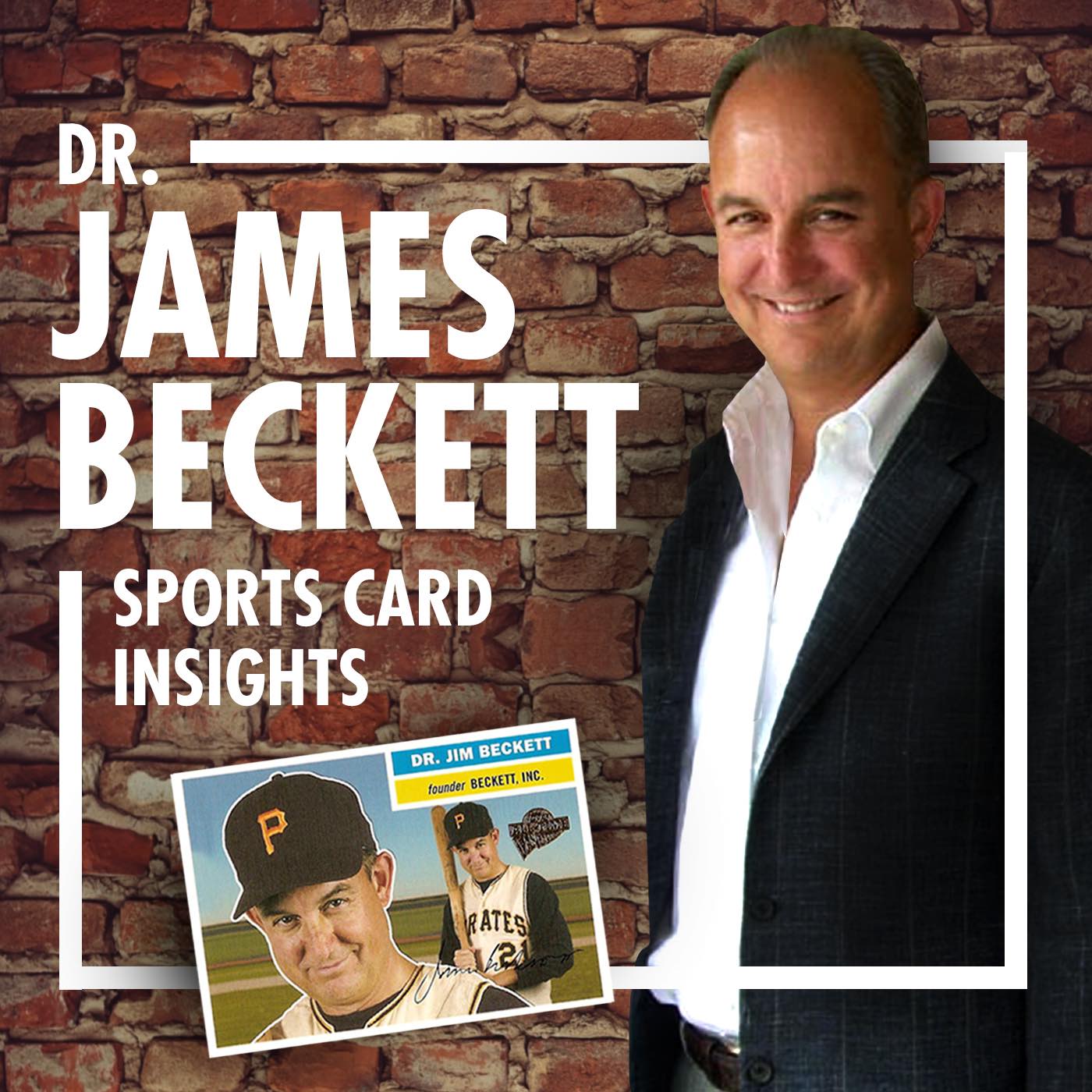
Dr. Beckett unretires to share sports card stories, analyses, and opinions, based on his six decades of intensive experience.
Episodes
Jun 15, 2026
Jun 15, 2026
15 min
Dr. Beckett hosts a Father’s Day podcast with Jeremy Lee of Sports Cards Live and his father, Harvey, discussing Jeremy’s record-setting purchase of a 1914 Cracker Jack Shoeless Joe Jackson card, why it felt emotional but was later validated by other buyers, and the role of due diligence, intuition, and luck. They explore common beginner mistakes, especially collecting in isolation, and emphasize learning through community, podcasts, and longitudinal, multi-variable thinking. Jeremy explains he has no remorse consolidating over 330 cards to fund the grail, and frames mistakes as “tuition,” noting his book Pops and Comps aims to reduce costly errors. Dr. Beckett advises beginners to “wait” before big buys and to buy with “weight” by acquiring larger lots to spread risk, while also addressing impulsivity, market volatility, risk tolerance, and hobby addiction support via Collectors MD.
00:30 Shoeless Joe Record Buy
01:27 Trusting Your Gut
02:22 Beginner Mistakes
03:47 Long Term Thinking
04:48 Consolidation No Regrets
05:24 Mistakes as Tuition
07:27 Wait and Weight Rule
08:49 Rookies and Risk Balance
10:55 Action Now vs Patience
11:38 Addiction and Self Control
12:58 Hobby Spectrum Types
Jun 12, 2026
Jun 12, 2026
21 min
Dr. Beckett welcomes guests Jeremy Lee (Sport Cards Live) and his father, Harvey. They reflect on sharing the hobby at events like the Toronto Sports Expo, emphasizing community, diplomacy, and how Jeremy’s approach mirrors Harvey’s service mindset. Harvey describes supporting Jeremy’s shift from accountancy into the hobby despite initial trepidation, while Jeremy explains his growth from content creator to publisher and collaborator came from impulsive ideas rather than a master plan. They compare being Canadian versus American in medicine and the hobby, highlighting technology’s global reach and currency impacts. The conversation closes with insights on market hype vs. long-term value, pricing signals, and common buyer mistakes driven by emotion, bias, and risk tolerance.
01:16 Hobby Time with Dad
02:17 Rotary and Community Lessons
04:52 Apple and the Tree
05:43 Pops and Comps
08:58 Building Without a Plan
12:38 Canada and a Global Hobby
16:05 Value vs Hype
16:44 Pricing and Market Signals
17:59 Buyer Mistakes and Bias
Jun 10, 2026
Jun 10, 2026
14 min
Dr. Beckett compares grilling and steak grading to sports card grading, noting that both rely on labels and subjective “eye appeal” but can still disappoint. He explains how chefs and buyers judge ingredients by sight, how steaks are graded (prime/choice) yet may not taste like their grade, and how it’s hard to “return the evidence” after eating. Comparing a cheaper USDA prime New York strip from Tom Thumb versus his usual Central Market purchase, he felt the steak tasted about a full grade lower despite looking similar. Beckett discusses trust in grading within limits, consistency, batch rhythm, pricing differences by venue, and parallels to card alteration and the need for truthful labeling, concluding that grading matters but isn’t perfect and that collectors gravitate to trusted graders.
00:44 Foodie Grilling Mindset
00:57 Steak Grading Meets Cards
01:58 Sending Back Mistakes
02:48 Bargain Prime Experiment
06:23 Subjective Value and Trust
08:53 How Graders Get Rhythms
10:12 Mint to Black Label Steaks
10:50 Alterations and Disclosure
Jun 8, 2026
Jun 8, 2026
17 min
Dr. Beckett gives more on “fixing grading,” stressing he isn’t attacking grading companies but wants better customer service, clearer communication, and faster answers amid major backlogs. He argues the industry’s constraint isn’t simply hiring, since many of the best “graders” are successful dealers who won’t work for grading firms. Therefore companies must develop talent through training, including grading academies, while preserving distinct company standards (and not loosening them). He proposes separate grading lanes (TCG, modern, vintage) with faster lane-specific training, separate submission batches, and incentives like loyalty points and referral rewards. He discusses eye appeal as a “plus” concept, surge pricing and tier closures, the economics of grading fees, and predicts increased raw-card activity and pre-screening at shows like the National. He categorically rejects the idea grading is a scam and calls for improvements that accelerate hobby growth.
00:40 Why Grading Needs Better Service
00:58 Finding and Training Great Graders
02:32 Grading Academy and Standards
05:04 Specialized Lanes to Clear Backlogs
06:11 Batch Submissions and Loyalty Points
09:27 Eye Appeal as a Plus System
10:52 Surge Pricing and Submission Economics
13:11 National Show and Raw Card Reviews
Jun 5, 2026
Jun 5, 2026
18 min
Dr. Beckett discusses how grading backlogs, especially at PSA, hurt the hobby’s liquidity and confidence more than pricing, noting long waits, submission shutdowns, and the impact on modern product timing. He reviews the current landscape (BGS improving, SGC positioned for vintage, CGC strong in TCG) and proposes “segmentation” with separate queues, pricing, and training lanes for TCG, modern, and vintage, arguing authenticity/alteration detection is the top priority. Beckett suggests operational fixes such as vouchers for customers willing to accept slower service, incentives for bulk/multiplicity submissions to speed grading, and loyalty points that can provide queue advantages while penalizing bad-faith submissions. He also highlights registries and pop reports as key infrastructure and suggests pre-screeners could offer labeled, non-binding raw grade estimates to avoid long grading limbo.
02:06 Backlogs and Hobby Impact
03:14 Separate Queues by Category
05:04 Training Lanes and Authenticity
08:04 Pricing and Voucher Ideas
09:53 BCCG Story and Bulk Efficiency
13:01 Queue Perks and Loyalty Points
14:31 Eye Appeal and Submitter Notes
15:50 Pre-Graders and Raw Reviews
Jun 3, 2026
Jun 3, 2026
23 min
Dr. Beckett shares the final segment of his long roundtable (outdoor) hobby dinner conversation from the Watters Creek Show, and apologizes for the poor audio. The group discusses how many key cards remain ungraded, suggesting vintage may be split among graded, ungraded-but-gradable, and missing cards, with many raw cards internationally. Conversation covers overrun production, factory finds, sheets/strips, and how handling affected Star cards. They also discuss distrust and clickbait around big hobby companies, the value of in-person interactions, and how economic downturns or a potential baseball labor dispute could impact the hobby, with experienced buyers seeing opportunity in price drops.
01:08 International Raw Card Supply
03:49 Iconic Cards and Alterations
04:48 Overruns and Factory Finds
08:21 Tracking Down Star Origins
09:42 Building Star Sets Today
10:36 PSA 10 Odds and Pop Talk
12:05 Big Brands and Distrust
14:26 Clickbait and Hobby Negativity
16:32 In Person Fixes Misconceptions
17:01 Down Economy Opportunity
18:06 Strikes and Industry Risk
Jun 1, 2026
Jun 1, 2026
14 min
Dr. Beckett, along with co-hosts John Newman and Brody the Kid on a recent Saturday morning episode of Hobby Hotline, discuss hobby safety after a report of a dealer being a registered sex offender, arguing promoters with national brands should require applications and permission for background checks as a business safeguard and deterrent, while also urging parental supervision and kids’ personal safety awareness. Brody agrees background checks are reasonable and advises kids to limit personal information. The conversation shifts to The National, where Dr. Beckett describes how he begins preparation for the next National the day after the past National, thus immediately thereafter, treating other shows as “batting practice,” plans who to see, and previews the confusing Chicago floor layout.
00:00 Oh YaAAS Advisor Role
02:15 How They Connected
03:24 Making It Official
04:55 Show Safety Concerns
05:34 Promoter Background Checks
07:49 Kid and Parent Safety Tips
10:51 Card Shows vs Disney
11:53 Families at The National
12:38 Prepping for Nationals
14:09 Navigating Chicago Layout
May 29, 2026
May 29, 2026
18 min
Dr. James Beckett shares (very poor, apologies!) audio from a wide-ranging hobby dinner conversation at the Watters Creek Show discussing how to broaden sports card collecting across race, gender, and socioeconomic lines by “planting seeds” through outreach and welcoming environments. The group notes increased diversity and more female collectors, considers barriers like storage space, access, and rising prices, and points to entry points such as affordable retail products, low-cost packs, and Panini soccer stickers. They debate how breaks, allocations, and day-one FOMO affect affordability and wax pricing, and highlight direct-to-consumer models like Upper Deck ePack and on-demand platforms such as Whatnot. The conversation also contrasts the magic of blind pack opening with deterministic buying, touches on complete sets as a low-cost onramp for kids, and mentions growing athlete participation in collecting.
00:33 Growing a Diverse Collector Base
03:19 Meritocracy and Inclusion
03:41 Global Hobby Seed Planting
05:48 Prices and Entry Barriers
07:31 Stickers and Cheap Entry
08:40 Breaks and Staircase Strategy
10:26 Breaker Economics and FOMO
13:09 ePack and On Demand Buying
13:59 Is Convenience Killing Magic
15:39 Complete Sets and Kid Collecting
May 27, 2026
May 27, 2026
13 min
Dr. Beckett rambles about Vegas trends, his new Oh YAAS advisory role, PSA’s counterfeit report, concerns about game-worn relics, and gives a rain-soaked review of Upper Deck O-Pee-Chee Platinum Hockey.
00:54 Vegas Trends and Hobby Pricing
03:48 Formall Advising Oh YAAS
05:07 PSA Counterfeit Report
06:11 Relic Cards Debate
08:14 Soaked Delivery and OPC Platinum
10:25 Box Breakdown and Collation
May 25, 2026
May 25, 2026
18 min
Dr. Beckett shares a hobby dinner conversation from the Watter’s Creek Show with out-of-town collectors discussing how rising wax prices and the growth of breakers have affected the hobby, and whether breaking is good or bad. Guests recount their collecting origins, from inheriting older brothers’ cards to buying singles instead of packs, and one collector’s focus on Star basketball with questions about how many high-value cards remain ungraded. The group also explores the lack of cultural diversity in collecting and efforts like Anthony Devine’s Rise program. They debate Fanatics/Topps “wave” releases, dynamic pricing, allocation, single licenses, and whether today’s box prices are sustainable. Additional topics include grading and consignment backlogs, potential AI/automation, investor-driven flipping vs true collecting, and the changing landscape of card shops and shows.
00:34 Collector Origins and Breaking
01:20 Upper Deck Career and Diversity
03:32 Star Cards and Grading Odds
06:37 Future Wax Box Prices
10:58 AI and Robotics in the Hobby
12:50 Collectors vs Flippers Debate
14:29 Nostalgia Pulls and Blank Backs
16:41 Sealed Wax and Store Boom