
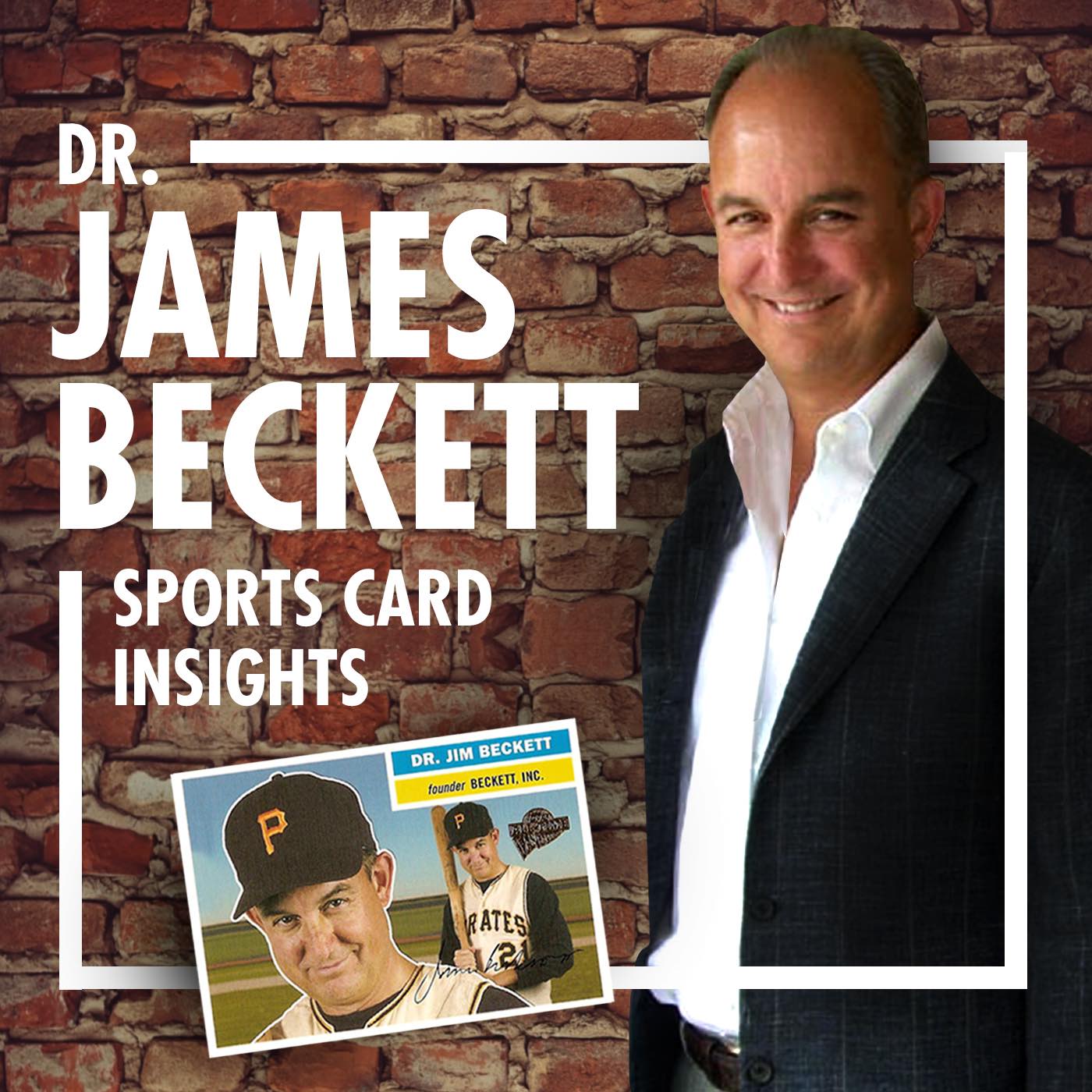
Dr. Beckett unretires to share sports card stories, analyses, and opinions, based on his six decades of intensive experience.
Episodes
May 22, 2026
May 22, 2026
13 min
Dr. Beckett continues his hobby “education” series by using a gifted 25-26 Upper Deck SPX Hockey box (3 cards per pack, 8 packs, ~$150 SRP; 20 boxes per case) to explain how collectors are really buying probabilities and should evaluate true scarcity and expected value rather than relying on luck. He estimates production by totaling serial-numbered parallels across a 165-card set (roughly 50,000 serial-numbered cards implying about 50,000 boxes, or ~2,500 cases) and shows how even a hypothetical $1,000,000 card would add only about $20 to a box’s expected value at 1-in-50,000 odds; similarly, 165 one-of-ones are extremely unlikely to hit. He discusses non-serial “gold” and “silver” parallels, arguing serial numbers could change perception, compares buying sealed product vs singles, and notes David Adams’ discounted random-team breaks versus case pricing, plus grading backlogs and volatility that reward informed, math-savvy decisions.
01:05 Box Basics and Pricing
01:40 Buying Probabilities Not Cards
03:37 Estimating Print Run
04:47 Expected Value Reality Check
06:28 One of Ones Math
07:19 Gold and Silver Scarcity
08:31 Buy the Product
09:23 Breaks Versus Cases
10:45 Volatile Prices and Grading
May 20, 2026
May 20, 2026
12 min
Dr. Beckett recaps Kyle Robertson’s busy Watters Creek Dallas Card Show, praising it as top-notch in the U.S. (behind only the National and Toronto Sports Expo) and noting aggressive pricing and big sales. After missing Thursday to attend an event honoring his wife’s volunteer work, he returns Friday, shares an interaction that leads to meeting Akbar’s wife, and describes why the show is his “happy place” for both buying and listening to hobby conversations. Beckett discusses fewer dollar boxes due to dealer changes and sell-outs, his bulk-buy discount approach, and discomfort with being offered special treatment as “the price guide guy.” He previews a future episode about a Friday-night hobby dinner and lists the eight attendees, and closes with upcoming shows and invitations for future hobby dinners.
00:28 Why Dallas Stands Out
01:46 Missing Thursday and Dealer Sellouts
03:50 Talking Star Basketball with Dave Dzendzel
04:44 Dollar Box Routine and Show Chatter
05:24 Two Overheard Hobby Conversations
07:07 Fewer Dollar Boxes and Pricing Strategy
08:30 Secret Shopper and Fair Deals
09:21 Hobby Dinner Plans and Sunday Skip
10:25 Dinner Guest Roll Call
11:28 Wrap Up and Future Dinners
May 18, 2026
May 18, 2026
15 min
Dr. Beckett discusses why practical “business math” matters in the sports card hobby, from basic percentages (e.g., buying at 80–90% of comps) to avoiding misleading “up 200%” headlines without price context. He urges using statistics, probability, and expected value to evaluate deals—especially breaks—rather than following the herd in prediction markets, noting that AI can also get numbers wrong and must be checked. Beckett also highlights time estimation as a useful skill for card-show work, and cautions that gambling-like products can affect winners as well as losers. He shares a probability anecdote about buying from multiple dealers named “Kevin S,” explains why events often aren’t independent, and previews a future nuts-and-bolts episode while encouraging collectors to do their own math (or find a math-savvy buddy) when pricing products and judging breaker configurations.
00:43 Why Math Matters in the Hobby
01:29 Percentages and Price Moves
02:46 Expected Value and Herd Thinking
04:04 AI Can Get Math Wrong
04:32 Time Math at Card Shows
06:17 Gambling Psychology and Edges
07:47 Kevin Odds and Independence
09:58 Expected Value in Product Pricing
10:54 Co-op Breaking and Breaker Boxes
May 15, 2026
May 15, 2026
14 min
Dr. Beckett explains how stronger reading and writing skills can help collectors enjoy the hobby more through better communication, preparation, and understanding. He reflects on learning through cards as a kid (reading backs, calculating stats, sports biographies) and shares how his parents started a free school in South Dallas to help at-risk students learn basic skills, showing that anyone can make a difference. He contrasts long-form reading with movies and warns against overreliance on Google/AI, including AI “hallucinations,” advocating genuine understanding. He also compares 2025-26 Panini Prizm soccer favorably to Donruss, discusses grading timing ahead of the World Cup, shares finding a Snakeskin in a dollar box, and declines a podcast pitch about cross-border shipping.
01:00 Modern Communication Skills
02:28 Parents Start a School
04:24 Why Reading Matters
05:03 Books vs Movies
06:25 Reading in the Hobby
07:22 AI Summaries and Errors
08:56 My Collecting Phases
11:17 Prizm and Donruss Break
12:09 World Cup Grading Dilemma
12:52 Dollar Box Snakeskin Win
13:14 PR Pitch and Publicity
May 13, 2026
May 13, 2026
15 min
Dr. Beckett and Rich Klein discuss a listener question about why some 1990 Topps football cards have a back disclaimer (and hash mark variations), speculating it relates to Pro Set’s “official card of the NFL” status, NFL/NFLPA licensing turmoil, and possibly different print runs or printing locations. They also talk about card show logistics, including using hallway or side-room tables to create seating and to draw traffic into less-visited rooms by placing autograph guests or services there. The episode then shifts to the 1993 Topps R&N China/Porcelain cards, noting subtle variations, uncertainty about the checklist, and the difficulty of valuing rarely seen singles like an Orlando Merced card without reliable comps, leading into a broader discussion of “price above replacement,” dealer pricing, customer relationships, and the risks of selling items displayed at outdated prices.
00:41 1990 Topps Disclaimer Mystery
02:16 Pro Set Influence and 1992 Chaos
04:52 Pro Set Press and Overproduction
05:44 Show Tables and Floor Layout
07:13 1993 Porcelain Parallel Debate
09:51 Pricing Without Comps
May 11, 2026
May 11, 2026
16 min
Dr. Beckett and Rich Klein discuss the intense three-week stretch during the McGwire–Sosa home run chase when Rich was inundated with reporters’ calls, often having to explain the sports card hobby from scratch, and how it gave perspective on the daily strain public figures face; Rich recalls briefly escaping afterwards to Houston for a Cubs–Astrodome weekend. They pivot to Rich’s music hobby—listening to radio airchecks and hosting monthly interactive “music games”—and relate it to collecting as a pursuit or “chase” rather than simply owning a collection, citing examples like Al Rosen and the appeal of finding specific cards such as a 1952 Topps ERR Johnny Sain. The episode also covers bootstrapping hobby businesses, comparing Jeremy’s CIA Auctions garage-based growth to Beckett and others’ gradual expansion, real estate and security needs, and the disruption of frequent moves.
00:41 McGwire Sosa Media Frenzy
02:26 Houston Trip and Hobbies
03:00 Music Collecting and Games
06:09 The Thrill of the Chase
07:47 Vintage Set Talk and Finds
10:06 Bootstrapping Auction Businesses
11:31 Beckett Growth and Space Lessons
May 8, 2026
May 8, 2026
21 min
Dr. Beckett welcomes Ray Fonio aka Ray from Philly to discuss the 2026 Baseball Card Hall of Fame ballot, reminds viewers to vote by May 14 at www.thesportscardhalloffame.com, and reviews how the process works: separate pre-war and post-war ballots with 25 cards each, selecting five per ballot. Dr. Beckett explains his voting philosophy balancing rarity and demand, then walks through key pre-war candidates including Old Judge, T206, Cracker Jack, and the 1925 Exhibit Lou Gehrig, plus thoughts on error cards and oversized issues. For post-war, he highlights choices and debates around regional and modern cards, including 1947 Bond Bread Jackie Robinson, 1949 Bowman Roy Campanella, 1950 Toleteros Josh Gibson, 1968 Topps 3D Clemente, and 1980 Charlotte O’s Cal Ripken, and discusses potentially splitting the post-war era and creating separate ballots for non-mainstream issues.
00:54 Pre War Picks Old Judge Icons
01:20 Shoeless Joe and Rarity Theory
02:27 T206 Errors Doyle vs Magie
04:28 Turkey Reds and Oversize Regrets
05:55 Cracker Jack and Exhibit Gehrig
07:18 Diamond Stars and Write In Ideas
09:36 Campanella and Josh Gibson Spotlight
13:20 Clemente 3D Ripken and Modern Cards
16:52 Rethinking Eras Mainstream vs Oddball
May 6, 2026
May 6, 2026
16 min
Dr. Beckett recaps his Toronto card show trip, highlighting how the experience felt almost like the National—spending nearly as much but 90% of his purchases were hockey cards. He describes strategies for finding value and dollar boxes, negotiating volume deals (especially late Sunday), and a key monster-box purchase he immediately dropped off at COMC after securing trust via Jeremy Lee. He details aggressive bargain-pulling (including 400 top-loaded cards in an hour), navigating mixed “$1 and up” boxes, and learning how structured pricing reflects smart dealer business strategy. Beckett shares a vintage type-card reality check on pricing, notes positive interactions with Canadian collectors, and explains that his customs fears proved unfounded despite being prepared with receipts.
00:31 Packing Cards and Customs Worries
01:07 Show Vibe and Finding Value
02:05 Monster Box Deal at Close
03:42 Jeremy Lee Check Assist
05:16 400 Card Dollar Box Sprint
07:11 Negotiating Mixed Price Boxes
09:52 Vintage Type Cards Reality Check
13:32 Customs Non-Issue
14:22 Friends and Show Encounters
May 4, 2026
May 4, 2026
16 min
Dr. Beckett and Rich Klein discuss how explicitly asking listeners for questions can boost Q&A episodes, referencing Greg Miller’s approach. They touch on hobby retail growth, including Nick’s second location and WAXXED opening three Houston-area stores. They answer a question about late-1940s/early-1950s Penny King Cracker Jack player charms, noting their appeal, cataloging challenges, and Beckett’s push to be encyclopedic. The conversation shifts to whether Beckett should have cataloged unlicensed Broder-type sets, weighing their easy reprintability, legitimacy concerns, and today’s growing gray areas, including Panini Instant-style items without numbering. They also explain why the Dallas Card Show brand is expanding to places like New Jersey and Chicago through partnerships that improve autograph guests while increasing card dealers, and Beckett shares insights on learning at shows by being “incognito” and talking with attendees.
01:44 New Card Shops Expanding
02:15 Cracker Jack Charms Talk
04:06 Cataloging Oddball Sets
04:53 Broder Reprints and Legitimacy
07:17 Gray Areas in Modern Cards
09:09 Dallas Card Show Goes National
10:16 Autograph Guests Strategy
14:12 Secret Shopper at Shows
May 1, 2026
May 1, 2026
14 min
Dr. Beckett addresses questions about unsolicited autograph requests, arguing he won’t respond without a real connection, and shares his view on collecting mascot/voice-talent autographs based on recognizability. He recalls Dallas’s Shortstop card shop near SMU in the late 1980s, and comments on a nine-year extension for Connor Griffin as smart, with room to renegotiate if performance warrants. Beckett reviews recent openings: Panini Donruss Soccer Road to the FIFA World Cup (high card count, Optic seeding, autograph/memorabilia, a Christian Romero auto mistaken for Ronaldo) and Upper Deck releases including 2025-26 Flair hockey, 2026 AEW Allure and Allure Golf, and 2025-26 Metal Universe hockey highlighting PMGs, base-set appeal, and insert scarcity, then closes with playoff hockey and Stars fandom.
00:39 Autograph Request Policy
01:32 Mascot and Celebrity Autos
02:10 Dallas Card Shop Memories
03:09 Connor Griffin Contract Talk
04:02 Panini Donruss Soccer Rip
05:42 Upper Deck Flair Hockey
07:20 Allure Wrestling and Golf
09:46 Monopolies and Licenses
11:05 Metal Universe Hockey PMGs